Authors:
Historic Era: Era 10: Contemporary United States (1968 to the present)
Historic Theme:
Subject:
Winter 2026 | Volume 71, Issue 1



Authors:
Historic Era: Era 10: Contemporary United States (1968 to the present)
Historic Theme:
Subject:
Winter 2026 | Volume 71, Issue 1

Democracy works only when enough of us believe democracy works.
Winter 2026 | Volume 71, Issue 1
Editor’s Note: Eric P. Liu is the CEO and co-founder of Citizen University, a non-profit organization promoting civic empowerment, and the author of numerous books on civic engagement. Portions of this essay were used in talks at a TED Conference and the National Summit on Civic Education sponsored by the Jack Miller Center.
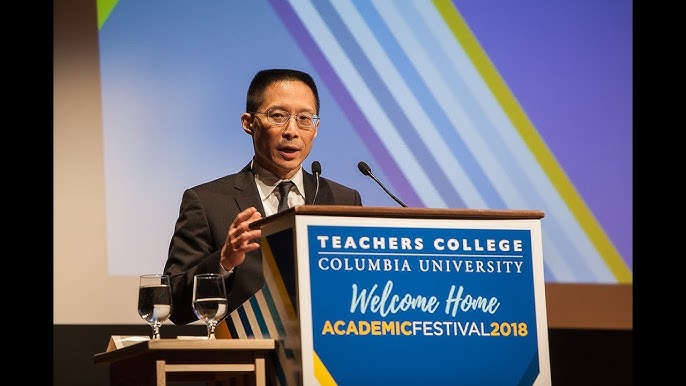
I bring you greetings from the 54th-freest nation on earth.
As an American, it irritates me that my nation keeps sinking in the annual rankings published by Freedom House. I’m the son of immigrants. My parents were born in China during war and revolution, went to Taiwan and then came to the United States. All my life, I’ve been acutely aware just how fragile an inheritance freedom truly is. That’s why I spend my time teaching, preaching and practicing democracy.
I have no illusions. All around the world now, people are doubting whether democracy can deliver. Autocrats and demagogues seem emboldened, even cocky. The free world feels leaderless.
And yet, I remain hopeful. I don’t mean optimistic. Optimism is for spectators. Hope implies agency. It says I have a hand in the outcome. Democratic hope requires faith not in a strongman or a charismatic savior but in each other, and it forces us to ask: How can we become worthy of such faith? I believe we are at a moment of moral awakening, the kind that comes when old certainties collapse. At the heart of that awakening is what I call “civic religion.” And today, I want to talk about what civic religion is, how we practice it, and why it matters now more than ever.
Let me start with the “what.” I define civic religion as a system of shared beliefs and collective practices by which the members of a self-governing community choose to live like citizens. Now, when I say “citizen” here, I’m not referring to papers or passports. I’m talking about a deeper, broader, ethical conception of being a contributor to community, a member of the body. To speak of civic religion as religion is not poetic license. That’s because democracy is one of the most faith-fueled human activities there is. Democracy works only when enough of us believe democracy works. It is at once a gamble and a miracle. Its legitimacy comes not from the outer frame of constitutional rules, but from the inner workings of civic spirit.
Civic religion, like any religion, contains a sacred creed, sacred deeds and sacred rituals. My creed includes words like “equal protection of the laws” and “we the people.” My roll call of hallowed deeds includes abolition, women’s suffrage, the civil rights movement, the Allied landing at Normandy, the fall of the Berlin Wall.