Authors:
Historic Era: Era 9: Postwar United States (1945 to early 1970s)
Historic Theme:
Subject:
Spring 2026 | Volume 71, Issue 2



Authors:
Historic Era: Era 9: Postwar United States (1945 to early 1970s)
Historic Theme:
Subject:
Spring 2026 | Volume 71, Issue 2

An intelligent ode to the prolific author and devoted bookseller.
Spring 2026 | Volume 71, Issue 2
Editor's Note: Eugene Meyer is the Editor of B’nai B’rith Magazine and was a long-time reporter for the Washington Post. Portions of this review appeared in the Washington Independent Review of Books, a nonprofit website dedicated to book reviews and writing about the world of books since 2011.
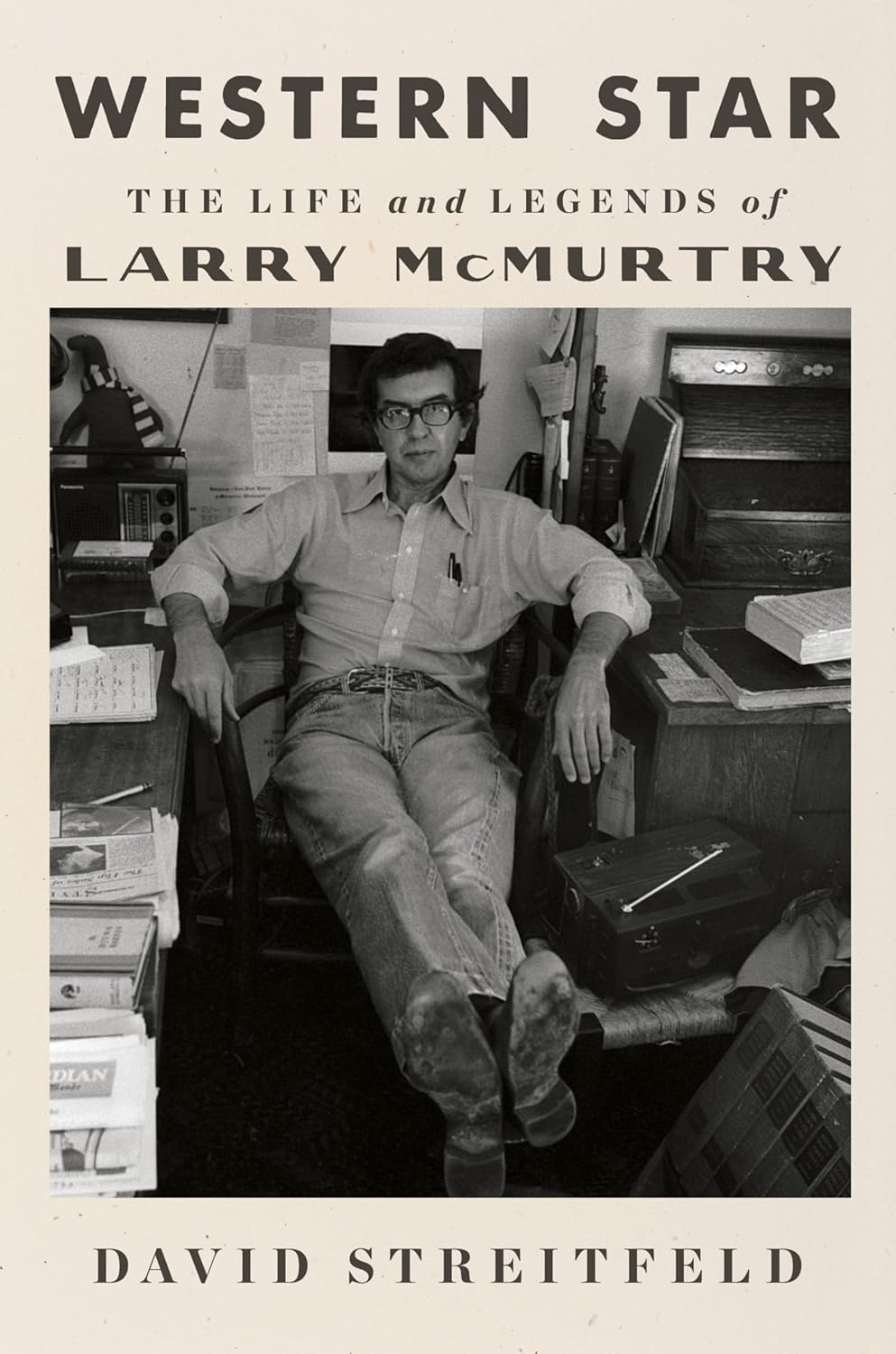
My wife’s grandfather was a used-book dealer for half a century until, twice ejected from his store by redevelopment, he moved his remaining stock into his Washington, DC rowhouse. There, he died in 1971 alongside all his books. As journalist David Streitfeld writes in Western Star, his affectionate biography of Larry McMurtry, all book dealers want to die with their books, and his subject was no exception. Indeed, he went to extremes to fulfill his destiny.
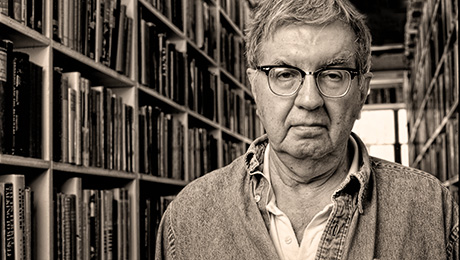
McMurtry, an Oscar- and Pulitzer Prize-winning author, screenwriter, and used-book dealer, died with his entire stock of 228,000 books crammed into five houses in his hometown of Archer City — barely a city at all — on the high plains of the North Texas panhandle.
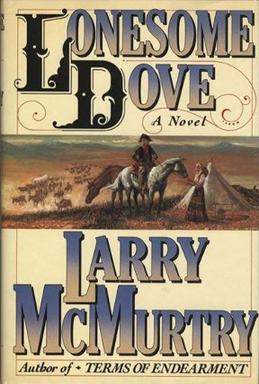
The author of nearly 50 books, he is perhaps best remembered for the 1989 TV miniseries “Lonesome Dove,” based on his episodic novel of the same name about a cattle drive to Montana that earned him the Pulitzer. Hailing from a family of ranchers, McMurtry drew on his own ancestors’ story to make the vanishing Old West of wide-open spaces come alive.
McMurtry’s fame also stemmed from his trio of books that were turned into Oscar-winning films: The Last Picture Show, his 1966 novel, was made into a 1971 black-and-white homage to a fading West Texas town much like his own and garnered three Oscars. His 1975 novel, Terms of Endearment, became a 1983 tearjerker that earned five Academy Awards. And the 1963 film “Hud,” based on McMurtry’s 1961 debut novel, Horseman, Pass By, starred Paul Newman and snagged three Oscars.
McMurtry was quirky and, at times, discouraged, but he was ultimately determined and dedicated to both his craft and to his side hustle as a bookseller. Throughout Western Star, Streitfeld ably and lovingly tells his story.
As a child, McMurtry grew up in a house with no books, yet his lifelong passion was books — not merely those he was writing or selling but all books — ranging across eras and genres. The first of the several used-book stores he owned was in Georgetown in Washington, DC. He called it Booked Up. The role of a bookstore, according to McMurtry, was “to preserve what was created in the past but ignored or shunned in the present and bring it forward into the future.”