Authors:
Historic Era: Era 9: Postwar United States (1945 to early 1970s)
Historic Theme:
Subject:
Winter 2026 | Volume 71, Issue 1


Authors:
Historic Era: Era 9: Postwar United States (1945 to early 1970s)
Historic Theme:
Subject:
Winter 2026 | Volume 71, Issue 1


John F. Kennedy challenged the US to accomplish what seemed impossible: put men on the lunar surface by the end of 1960s
Winter 2026 | Volume 71, Issue 1
Editor’s Note: Douglas Brinkley, a distinguished professor of history at Rice University and Contributing Editor of American Heritage, has written more than 20 books including American Moonshot: John F. Kennedy and the Great Space Race, in which portions of this essay appear. The book looks at how Kennedy envisioned the space program, his inspiring challenge to the nation, and America’s race to the moon..
Even the White House ushers were abuzz on the morning of October 10, 1963, because President John F. Kennedy was honoring the Mercury Seven astronauts in a Rose Garden affair.
Kennedy wanted to personally congratulate the “Magnificent Seven” astronauts, all household names, for their intrepid service to the country. His remarks would the end of the Mercury projects after six successful space missions.
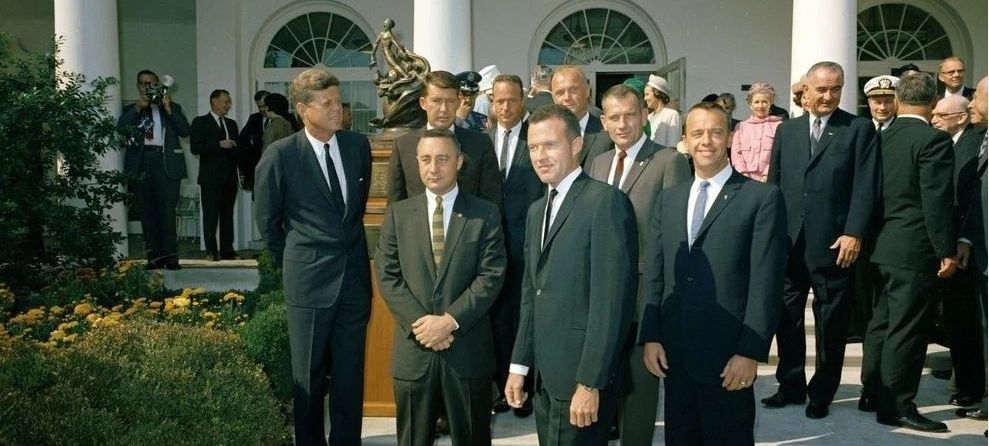
At the formal ceremony, Kennedy, in a fun-loving, jaunty mood, full of gregariousness and humor, presented the flyboy legends with the prize. It was the first occasion for all seven spacemen and their wives to be together at the White House since the maiden astronaut, Alan Shepard, accepted a Distinguished Service Award for his Mercury suborbital flight of fifteen minutes to an altitude of 116.5 miles on May 5, 1961. Surrounding Kennedy as he spoke were such aviation history dignitaries as Jimmy Doolittle, Jackie Cochran, and Hugh Dryden.
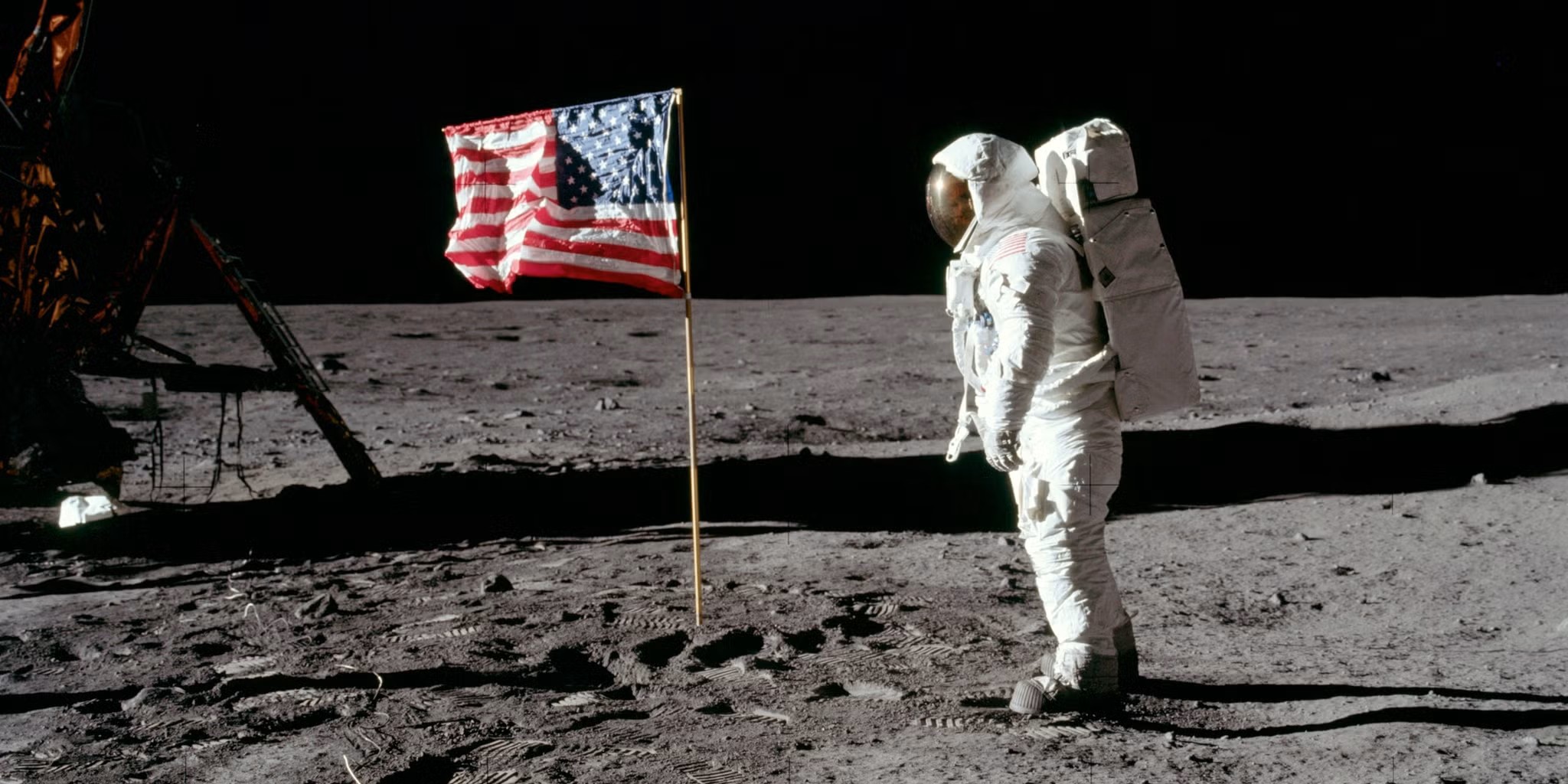
Instead of recounting the Mercury Seven’s space exploits in rote fashion, Kennedy used the opportunity to drive home his brazen pledge of 1961, that the United States would place an astronaut on the moon by the decades end. Scoffing at critics of Project Apollo (NASA’s moonshot program) as being as thickheaded as those fools who laughed at the Wright brothers in 1903 before the Kitty Hawk flights, he turned visionary. “Some of us may dimly perceive where we are going and may not feel this is of the greatest prestige to us,” Kennedy said. “I am confident that its significance, its uses and benefits will become as obvious as the Sputnik satellite is to us, as the airplane is to us. I hope this award, which in effect closes out the particular phase of the program, will be a stimulus to them and to the other astronauts who will carry our flag to the moon and perhaps someday, beyond.”
For Kennedy, much depended on the United States going to the moon, beating the Soviet Union, being first, winning the Cold War in the name of democracy and freedom, and