Authors:
Historic Era:
Historic Theme:
Subject:
Fall 2025 | Volume 70, Issue 4


Authors:
Historic Era:
Historic Theme:
Subject:
Fall 2025 | Volume 70, Issue 4


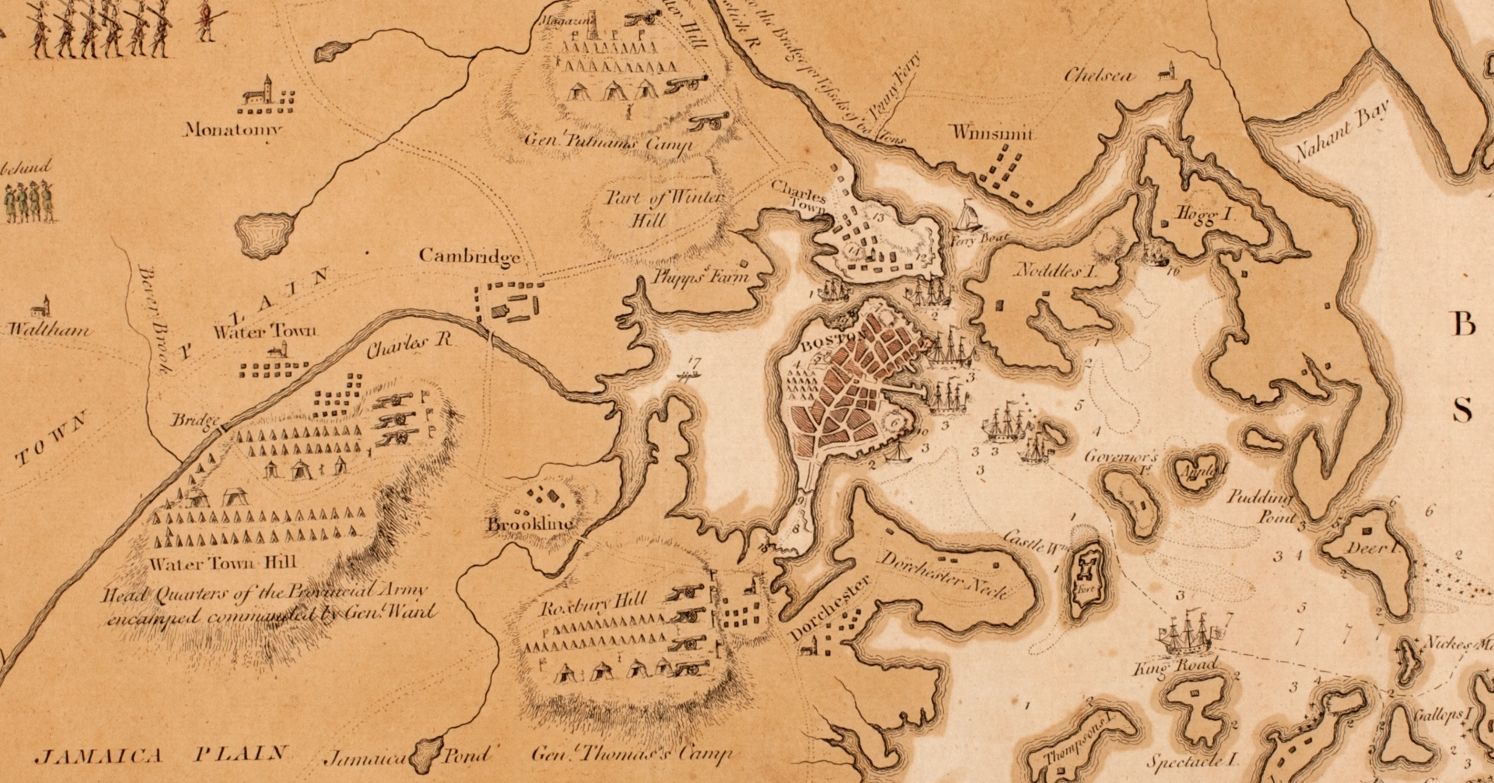
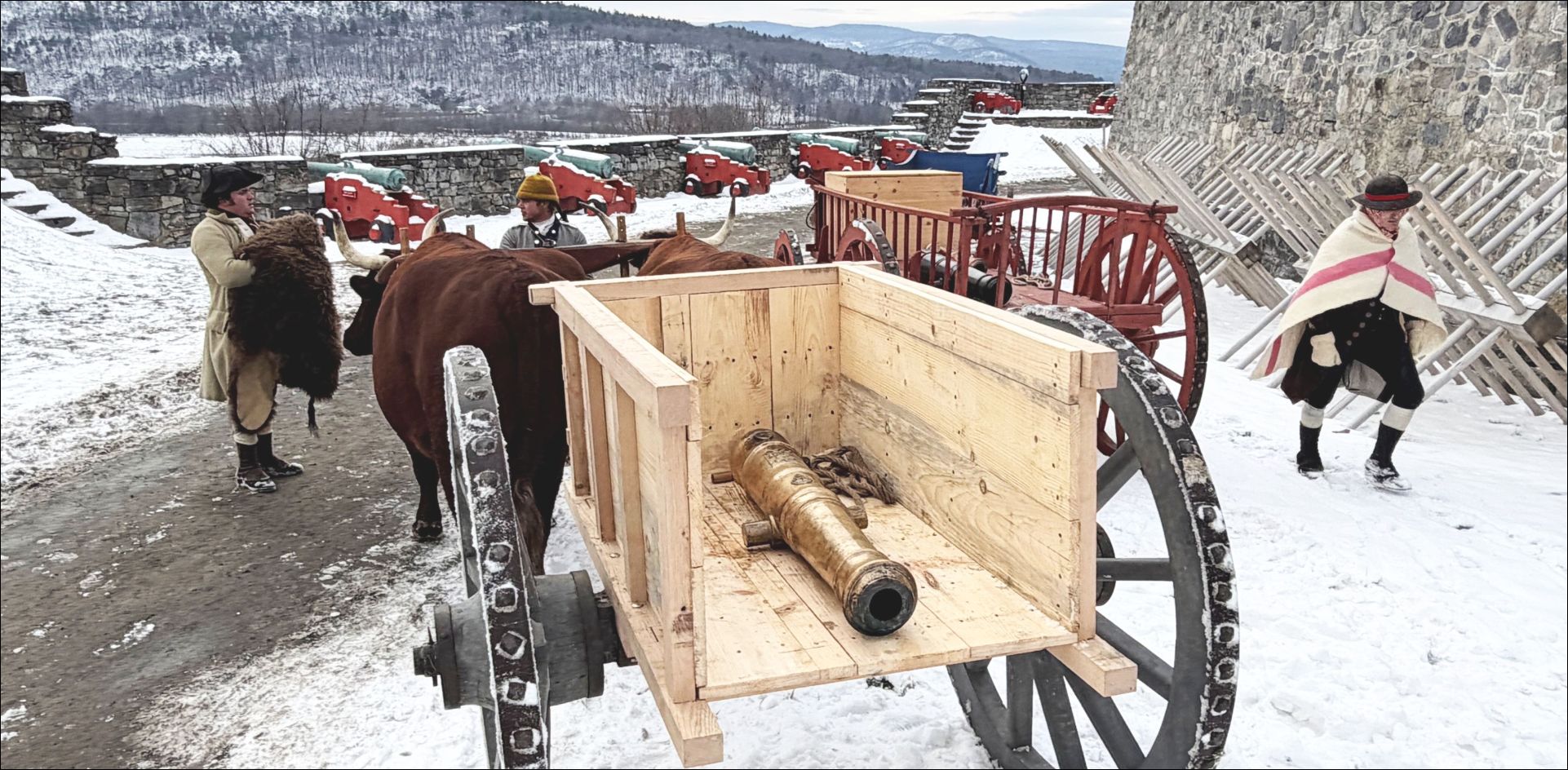
Setting out 250 years ago this month, Henry Knox’s “Noble Train” carried 60 tons of desperately needed artillery to help patriots oust British forces from Boston.
Fall 2025 | Volume 70, Issue 4
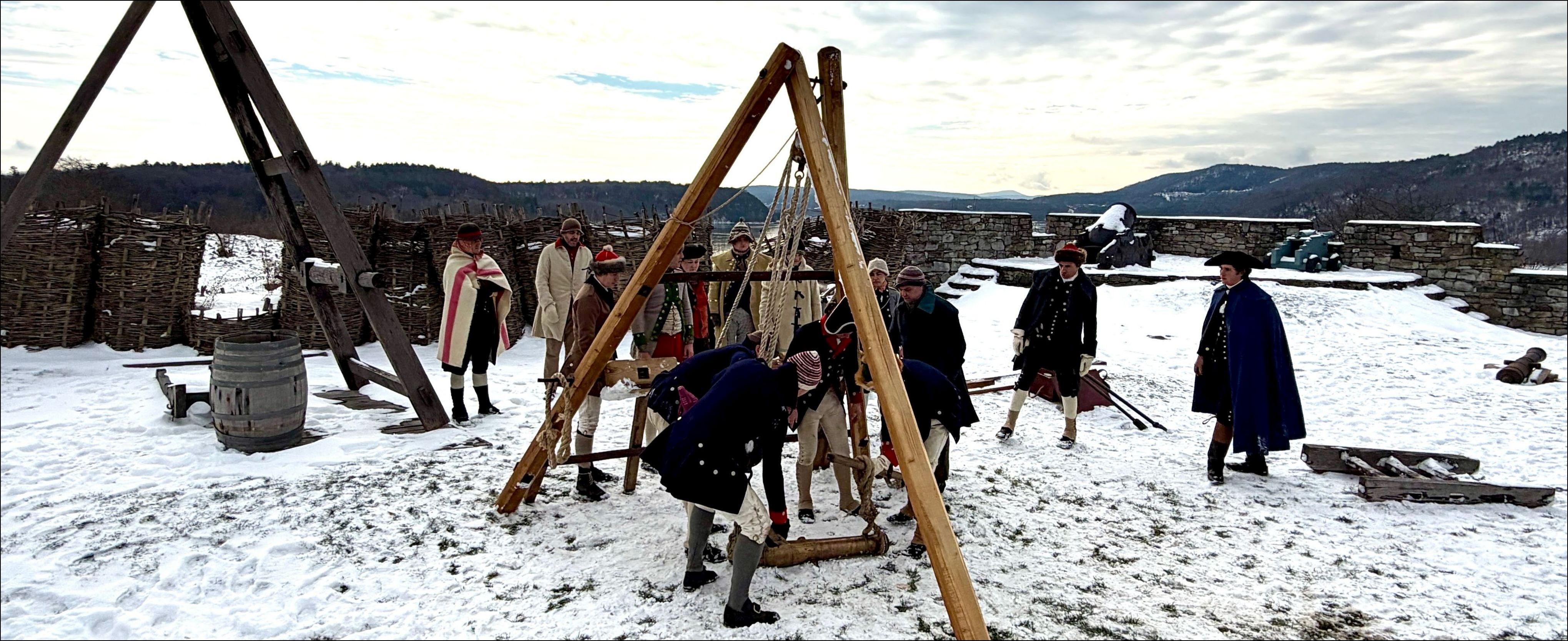
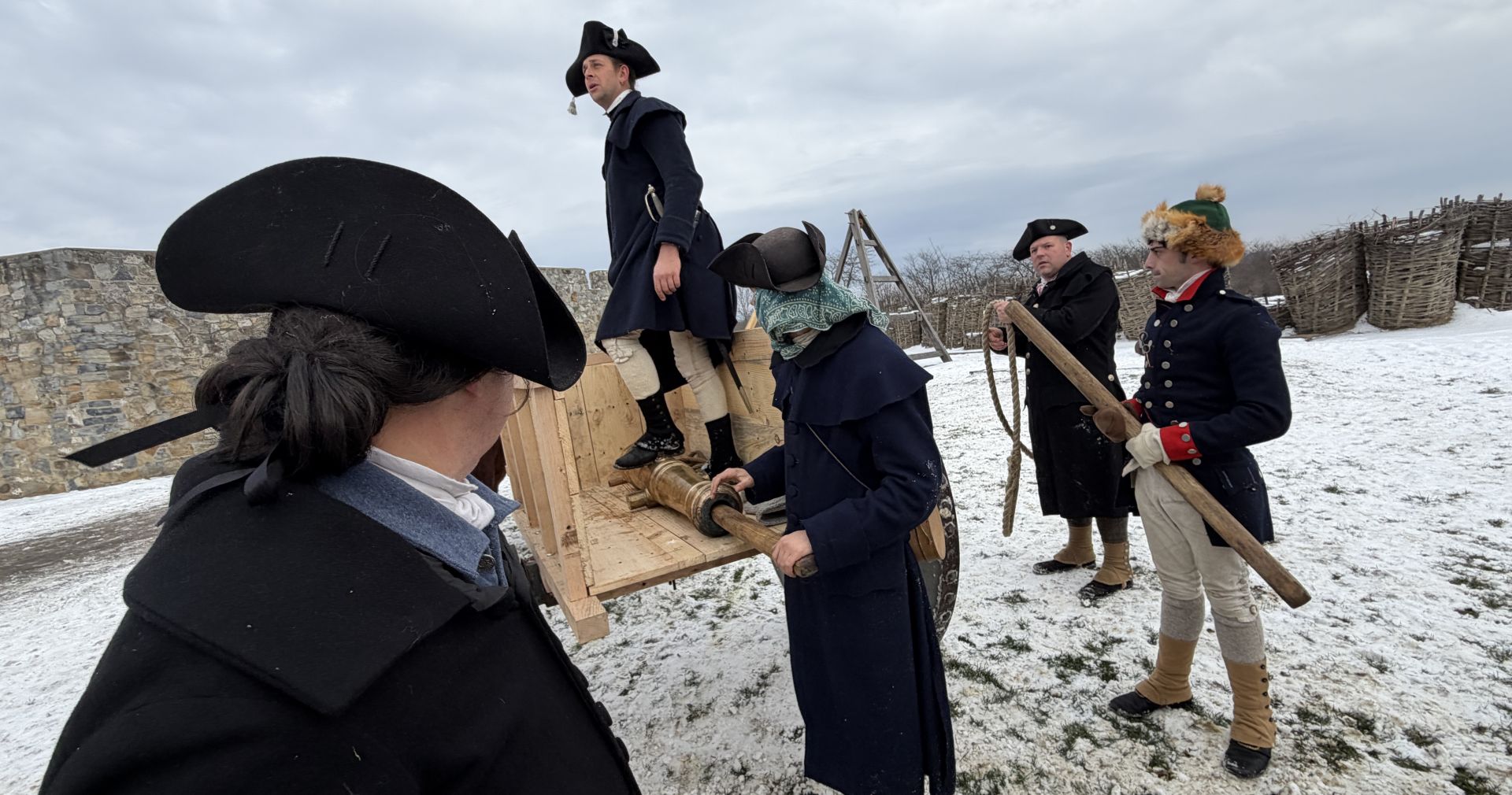
See our slideshow for more photographs of the current reenactment of the Knox expedition.
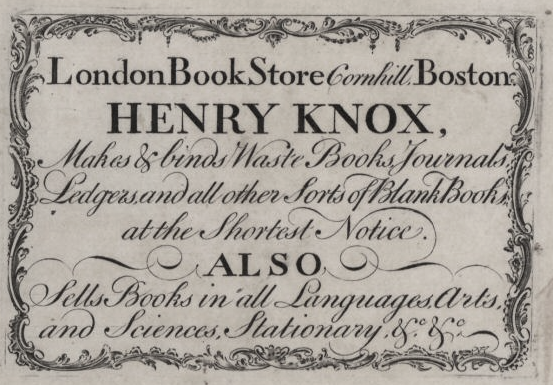
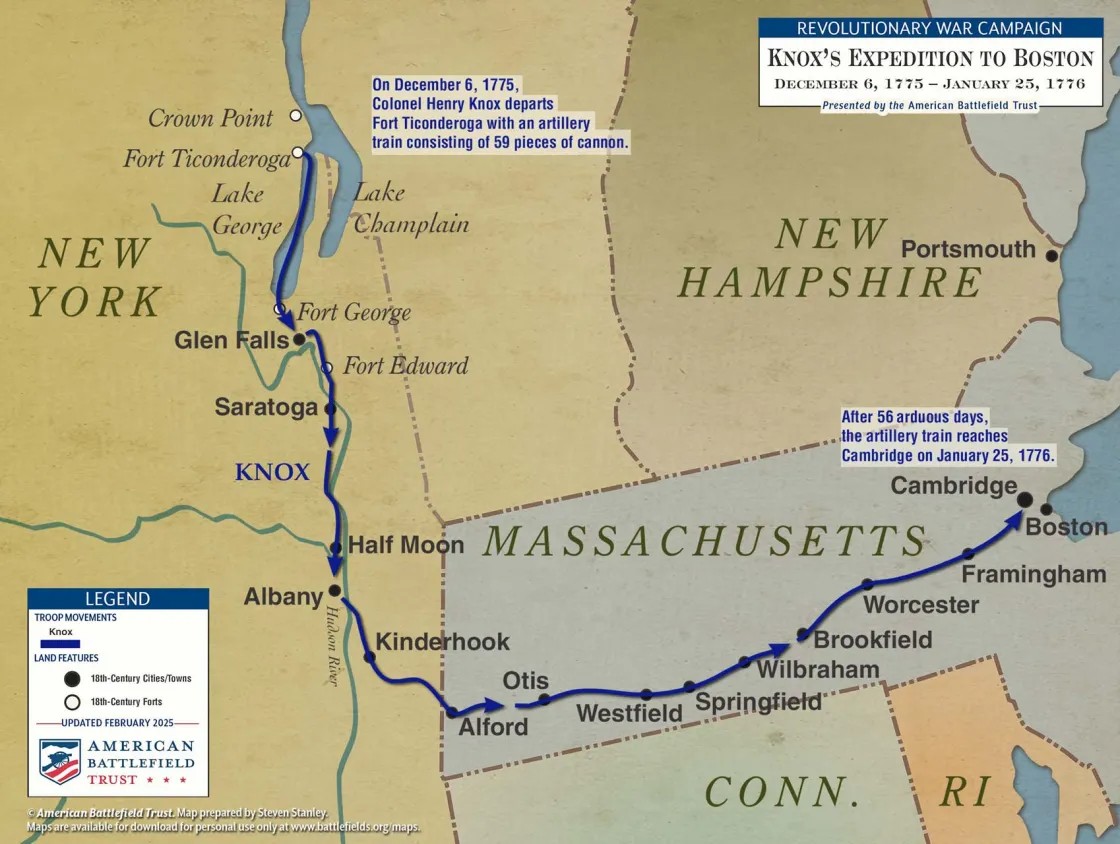
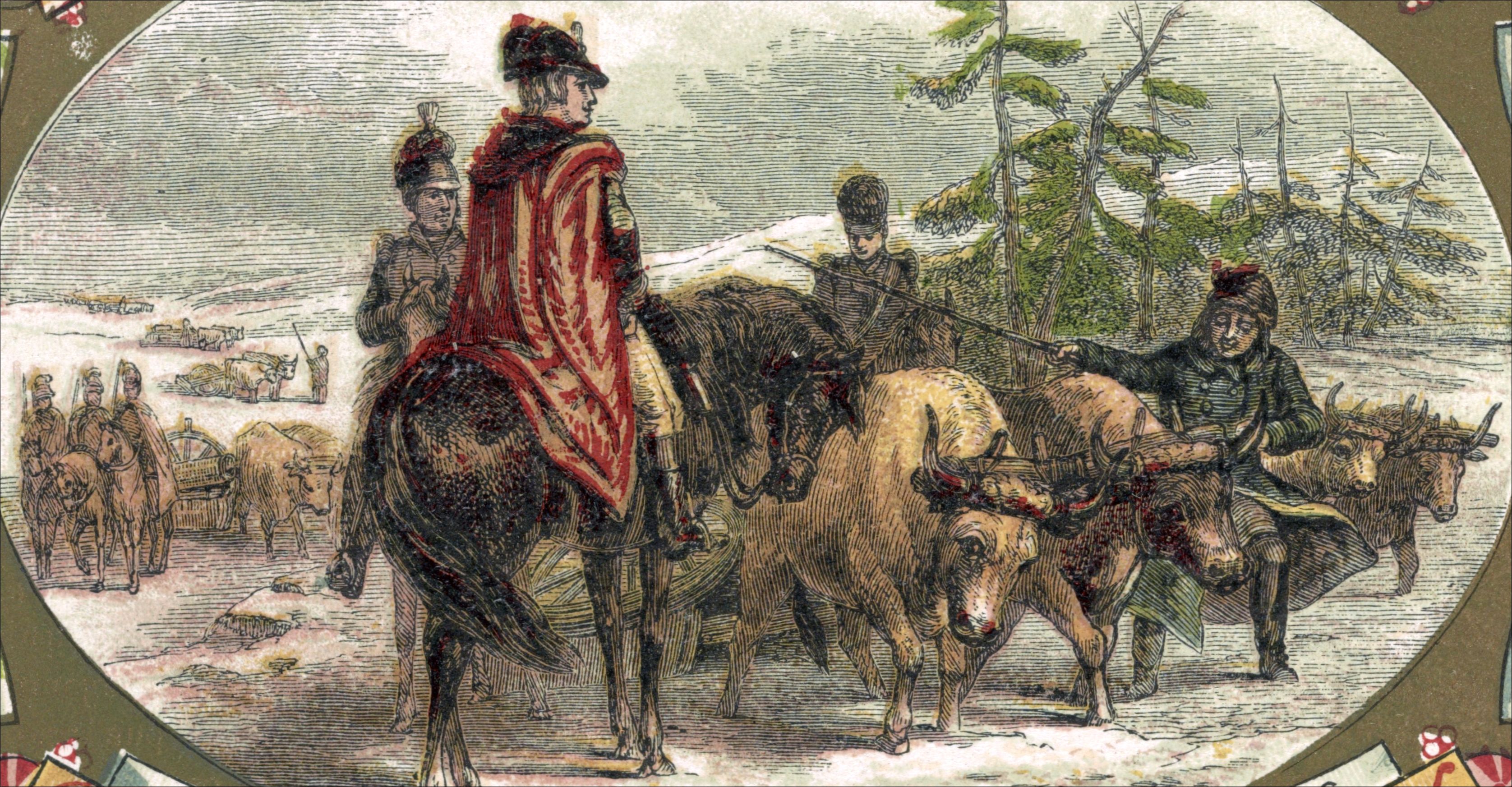
Two hundred and fifty years ago this month, a 26-year-old bookseller from Boston led a team of patriots that hauled 56 cannon and barrels of lead and flints 300 miles through the wilderness from Fort Ticonderoga in northern New York to the American forces besieging Boston. Henry Knox and his men accomplished that feat in the middle of winter, hauling 60 tons of supplies on ox carts and sleds up and down the Berkshire mountains in snowstorms and bitter cold.
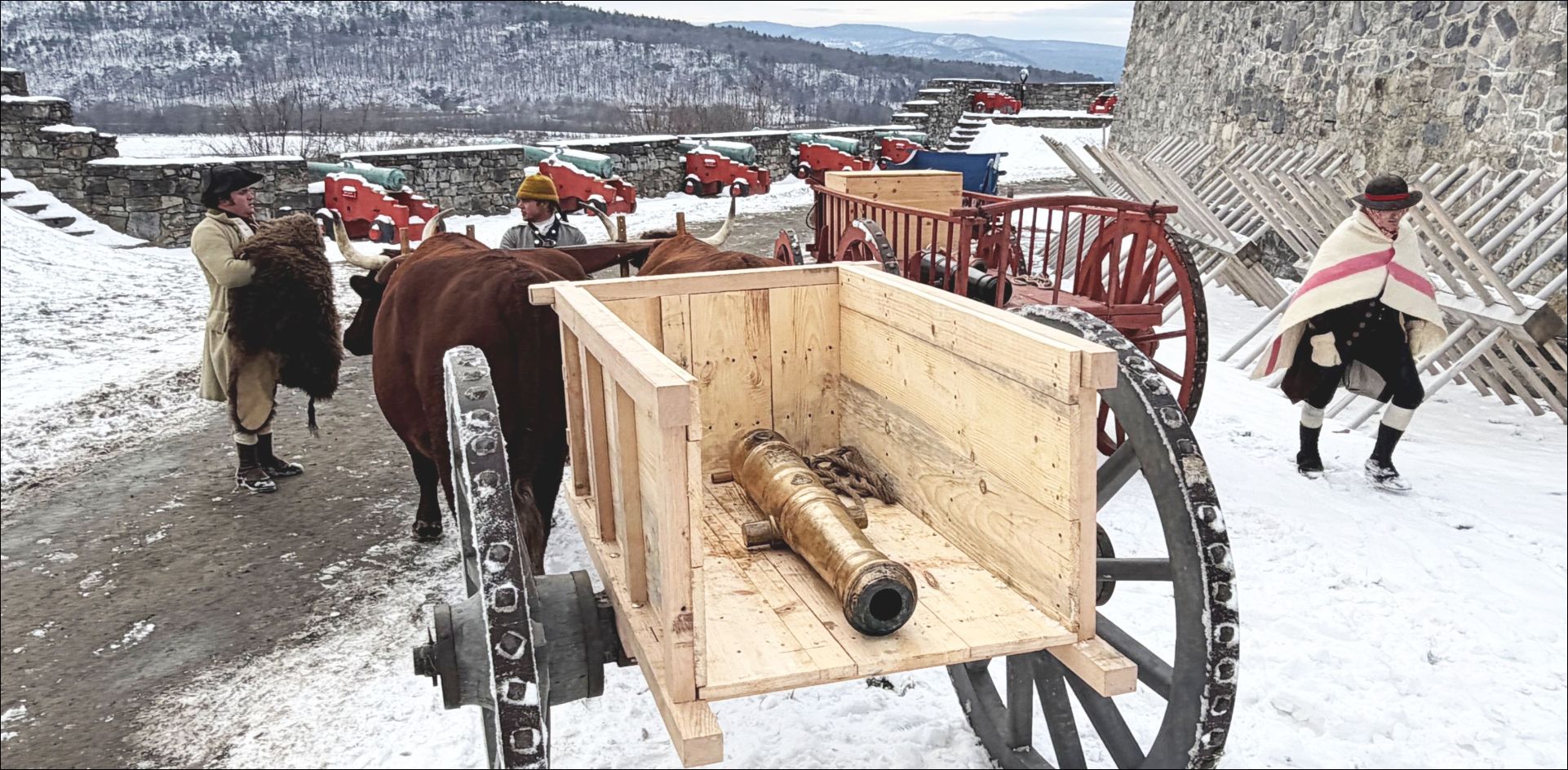
“Henry Knox’s expedition to secure cannon from Ticonderoga remains one of the most compelling experiences from the Revolutionary War,” says Matthew Keagle, curator of Fort Ticonderoga. “It’s a classic American story of someone from a humble upbringing who finds his way to greatness through his skills, his merit, and his experience.”
Washington Irving described Knox as “one of those providential characters which spring up in emergencies as if formed by and for the occasion.”
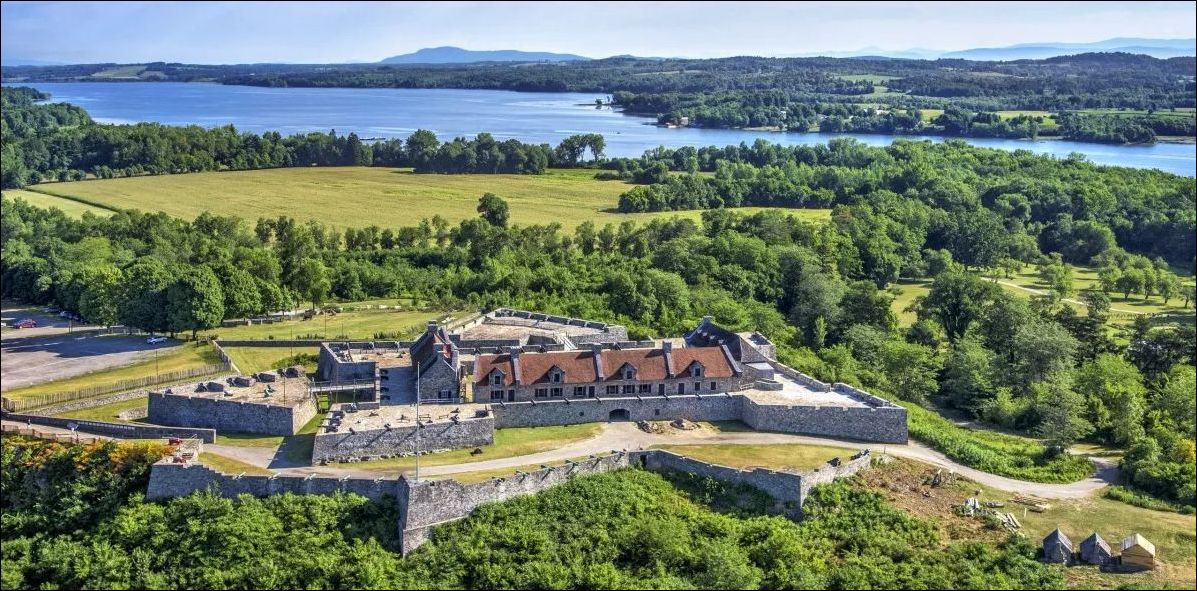
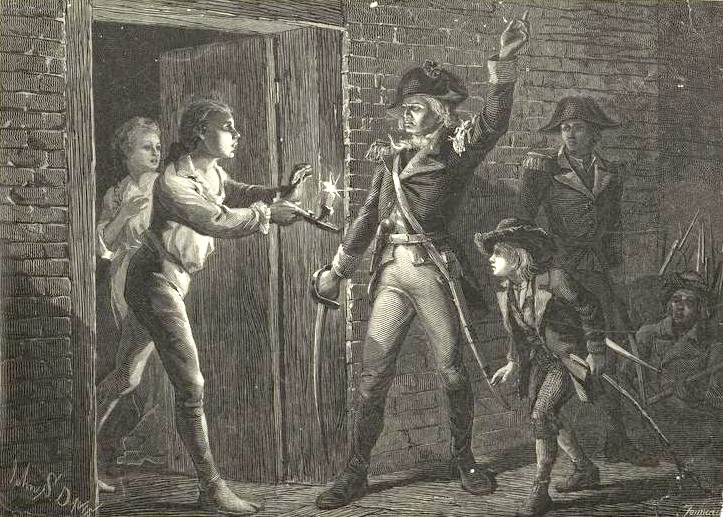
Earlier in 1775, just weeks after the fights at Concord and Lexington on April 19, the Massachusetts Committee of Safety commissioned Benedict Arnold to try to capture the cache of weapons at Ticonderoga. Separately, leaders in Connecticut encouraged Ethan Allen to try to take the fort with his Green Mountain Boys, a militia group from the area that would later become Vermont. Although the two groups acted independently, they would join forces before attacking the fort.
Ticonderoga was a large star-shaped fortress on Lake Champlain in northern New York that had been built in the 1750s by the French, who called it Fort Carillon. The stronghold controlled the waterways that facilitated north-south travel between Canada and New York, but by 1775, Ticonderoga was manned by only a small garrison of British troops. When Arnold